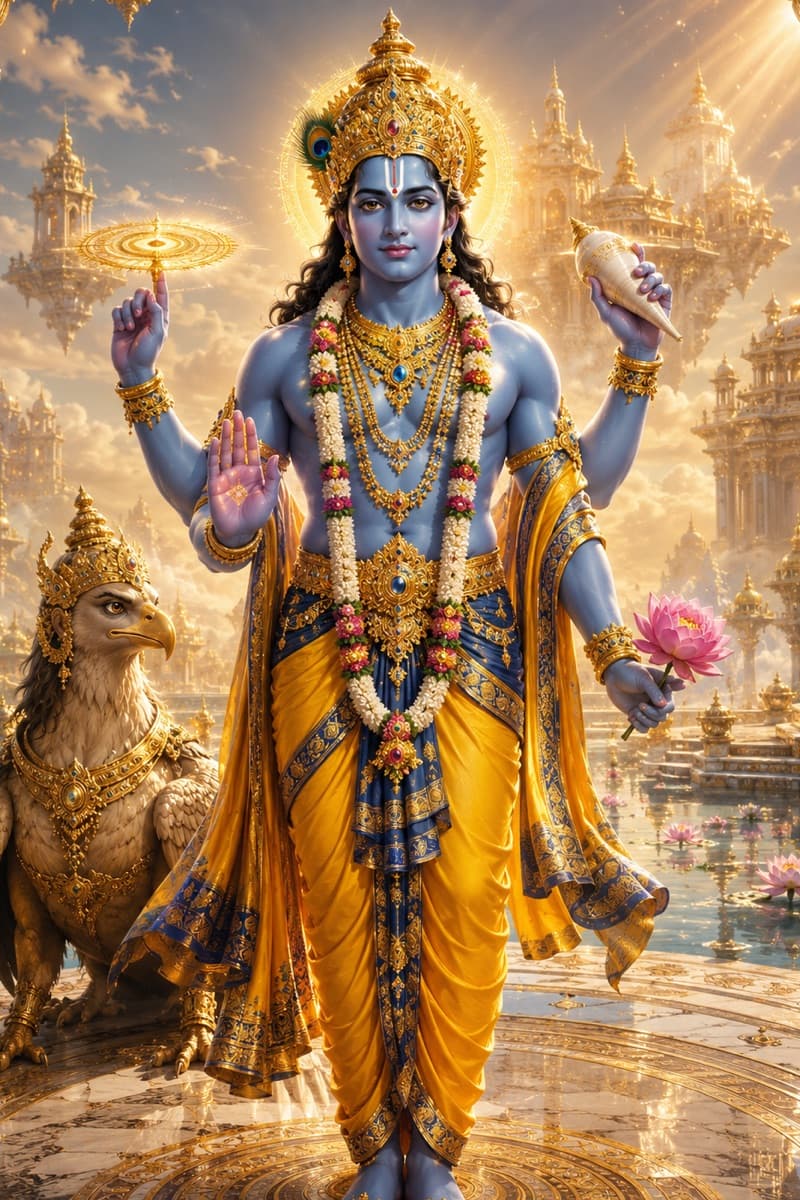
The Preserver
Vishnu
The god who reclines on a cosmic serpent in an ocean of milk, and who has walked the earth ten times over — as a fish, a boar, a dwarf, a prince, a cowherd — whenever balance needed restoring.
- weapon
- Sudarshana Chakra, Kaumodaki Gada
- abode
- Vaikuntha, atop Shesha Naga in the ocean of milk
- epithet
- Narayana, Hari, Jagannath
- role
- The preserver, one of the Trimurti
Of the Trimurti, Vishnu holds the office that never rests. Brahma's creation is a single act, complete at the beginning of time; Shiva's destruction arrives only at an age's end. Vishnu's task — preservation — runs continuously through every single day in between, watching, sustaining, and stepping in the moment the balance of dharma truly tips.
Resting on the Ocean of Milk
Vishnu is most often pictured reclining on the coils of the great serpent Shesha, afloat on the Ksheera Sagara, the cosmic ocean of milk, with Lakshmi at his feet. From his navel grows the lotus on which Brahma sits to perform his own work of creation — one god's rest is literally the ground another stands on to begin the universe.
The God With Four Hands
His four hands each hold a signature: the Sudarshana Chakra, a discus that returns to his hand after cutting down whatever threatens creation; the Kaumodaki, a mace of raw strength; a conch whose sound marks the beginning of righteous battle; and a lotus, representing purity untouched by the world it grows out of.
The Promise Kept Ten Times Over
Vishnu's most famous vow — whenever dharma declines, I manifest myself — is not abstract theology. It is a promise kept, concretely, across every age: as Matsya and Kurma and Varaha and Narasimha in the world's youngest era, as Vamana and Parashurama and Rama in the next, as Krishna in the one after, with one avatar, Kalki, still owed to an age not yet ended. No other deity in the tradition has returned to earth so many times, in so many forms, to do the same single job: keep the world from tipping past repair.
Stories
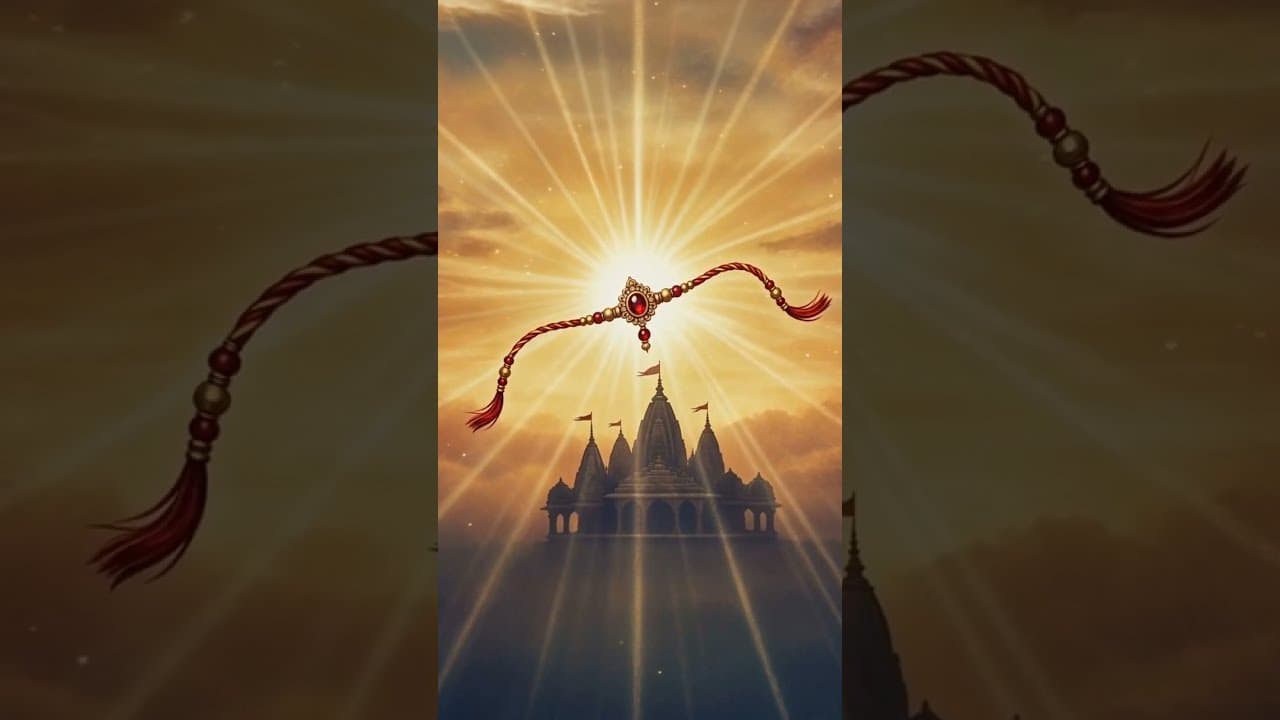
The Rakhi That Freed Vishnu — Lakshmi and King Bali
Bali kept his word so perfectly that Vishnu himself agreed to stand guard at his door — and would not come home. It took a goddess in disguise, and a single thread tied on a stranger's wrist, to bring him back.
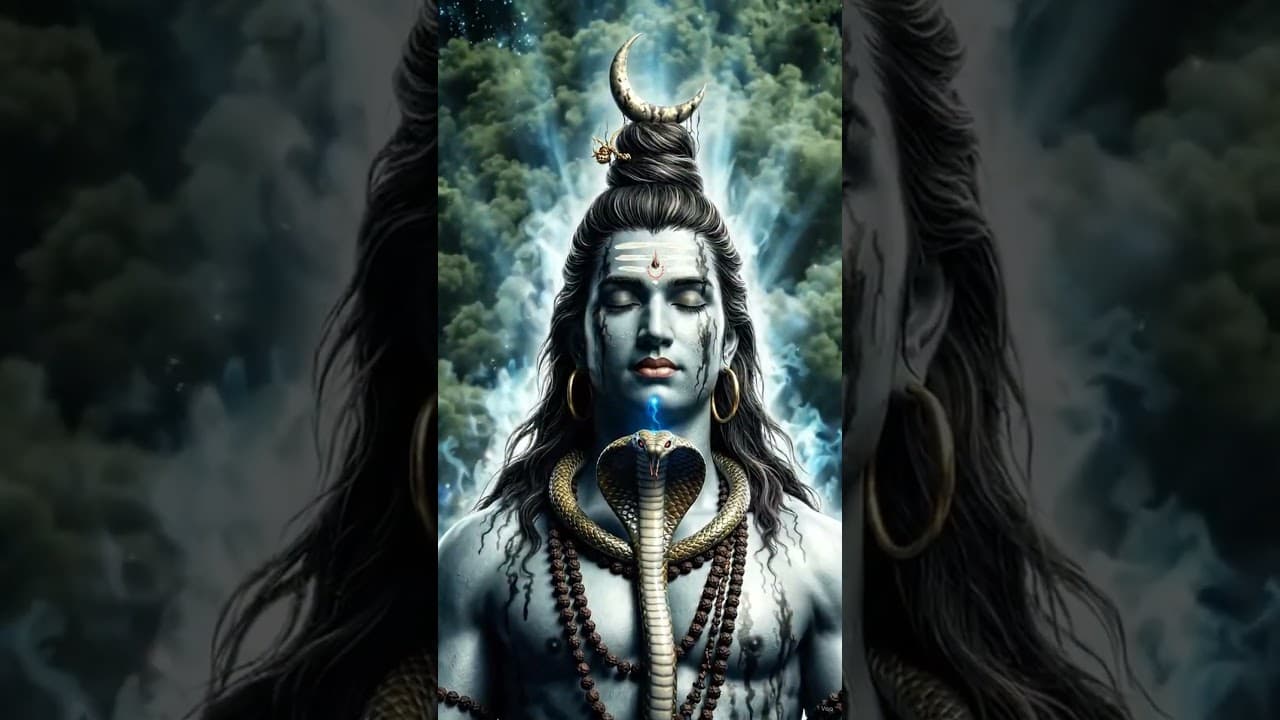
Neelkanth — The Night Mahadev Drank the Poison
The devas and the asuras churned the ocean for the nectar of immortality, and the first thing it gave them was death. Only one being in all of creation stepped forward to swallow it — and held it in his throat forever.