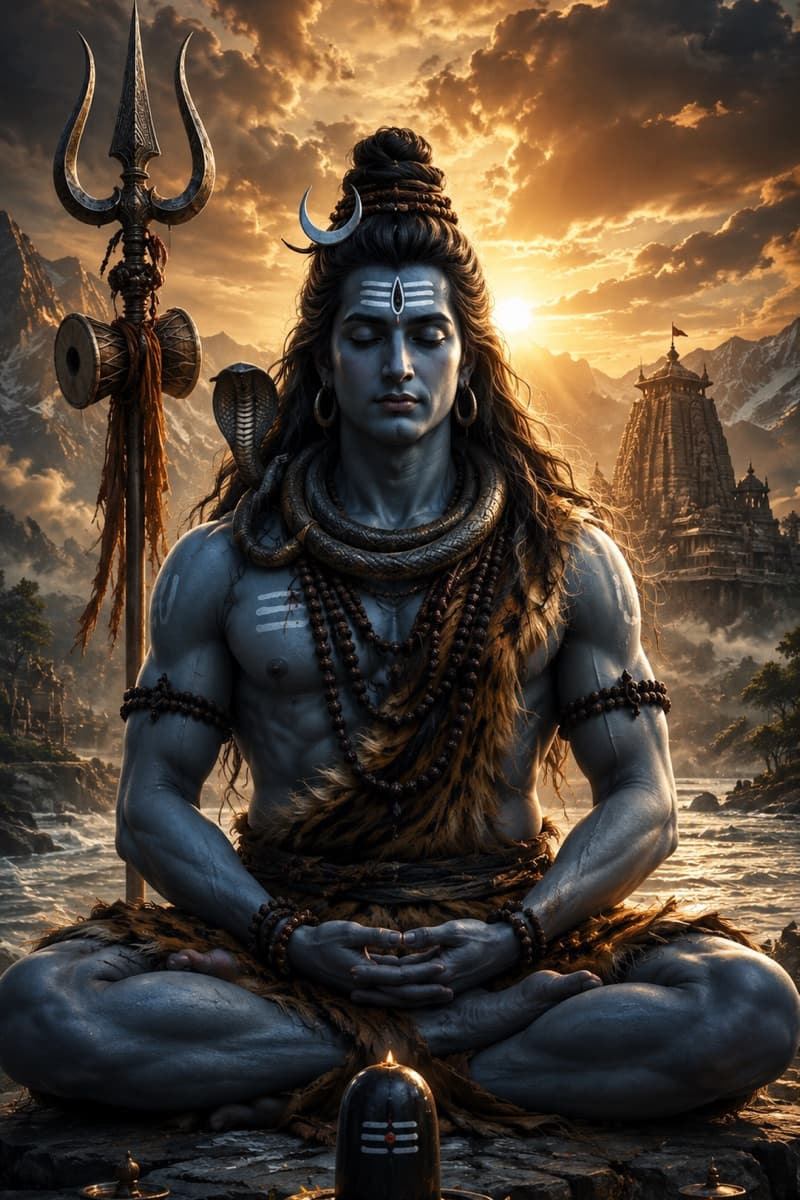
The Auspicious Destroyer
Shiva
The ascetic god who dances the universe into dissolution and stillness — meditating alone on Kailash, yet the first to answer any devotee who calls him with a pure heart.
- weapon
- Trishul (trident) and Damaru
- abode
- Mount Kailash
- epithet
- Mahadev, Bholenath, Nataraj
- role
- The destroyer, one of the Trimurti
Among the Trimurti — Brahma who creates, Vishnu who preserves, Shiva who destroys — it is Shiva who is worshipped least like a king and most like a wandering ascetic. Ash-smeared, matted-haired, seated in silence on no palace but a mountain, he is the god easiest to approach and hardest to fully understand.
The Meditating Ascetic
Shiva's default state is stillness — deep meditation atop Mount Kailash, the Ganga said to fall from heaven and land first in his matted hair before reaching the earth, breaking its fall so creation itself wouldn't be shattered by the impact. He carries a trishul, wears a serpent as a garland, and keeps a third eye on his forehead that, when opened, can reduce anything to ash.
The Cosmic Dancer
But Shiva is never only stillness. As Nataraja, Lord of the Dance, he performs the tandava — the dance that can either sustain the rhythm of the universe or, in its fiercest form, dissolve it entirely at the end of an age, only for creation to begin again. Destruction, in this vision, is never an ending. It is the necessary clearing before renewal.
Bholenath — Easily Pleased
Despite his cosmic scale, Shiva's most beloved epithet is Bholenath — the innocent, easily-pleased lord. Where other gods demand elaborate ritual, legend says Shiva can be moved by nothing more than a devotee's water and a bel leaf offered with sincerity. He is the god of outcasts and ash-covered wanderers as readily as of kings.
Husband, Father, Half of a Whole
With Parvati, Shiva forms one of the most complete unions in the pantheon — so entwined that he is depicted as Ardhanarishvara, half Shiva and half Parvati in a single form, embodying the inseparability of the masculine and feminine as one creative force. Their son Ganesh begins every new endeavor in Shiva's name.
Stories
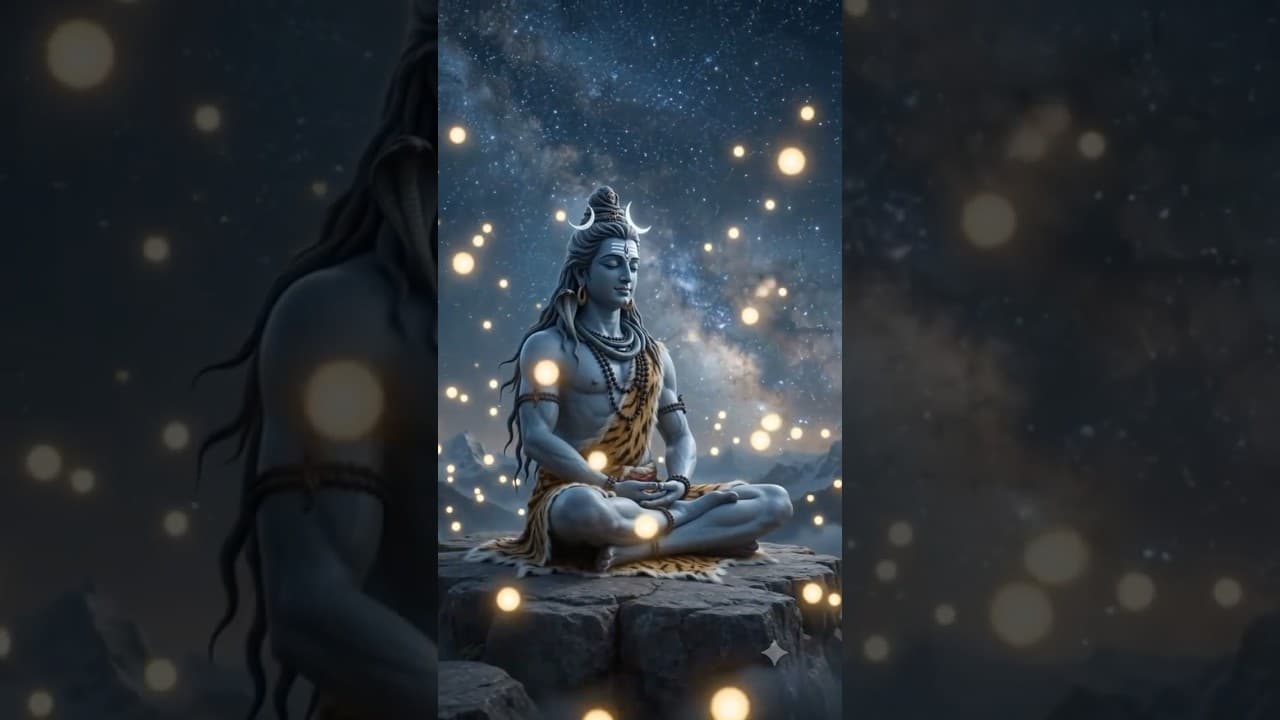
Why Mahadev Lives in the Cremation Ground
Every other god was given a palace. Shiva chose the one place the entire world runs away from — and made it the seat of the highest knowledge there is.
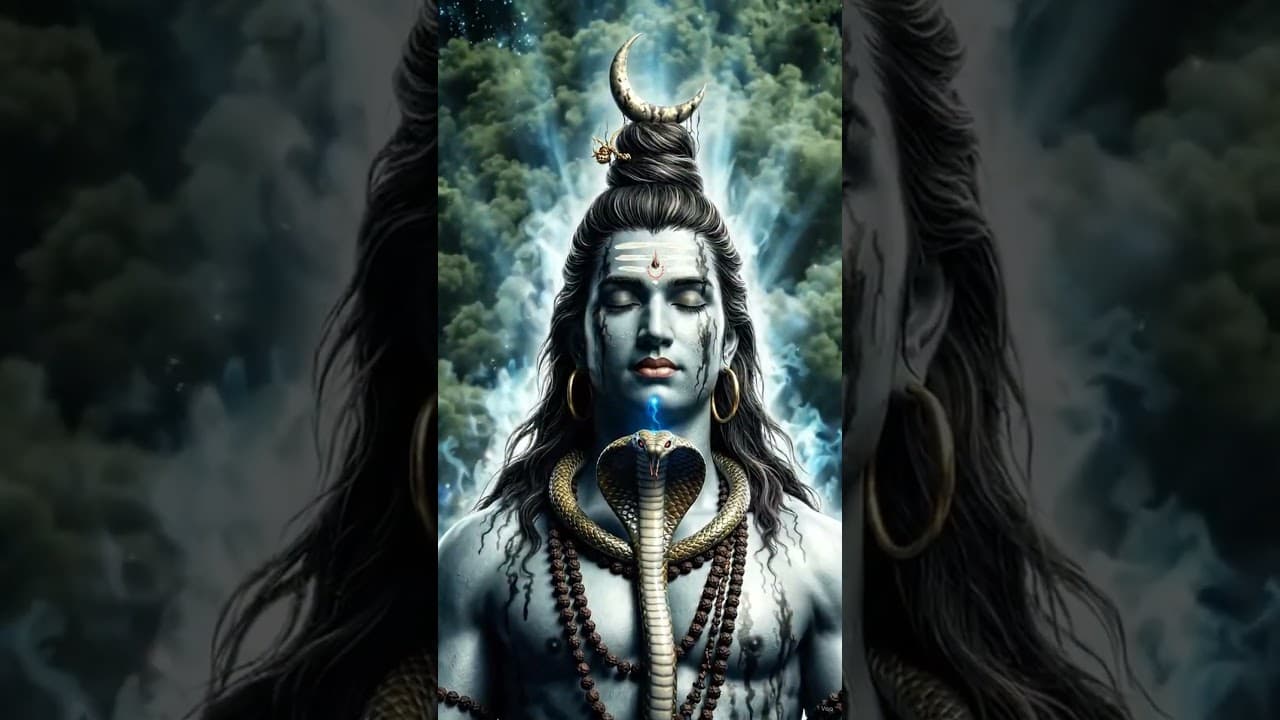
Neelkanth — The Night Mahadev Drank the Poison
The devas and the asuras churned the ocean for the nectar of immortality, and the first thing it gave them was death. Only one being in all of creation stepped forward to swallow it — and held it in his throat forever.