The Forest Prince
Eklavya
A tribal prince who taught himself to outshoot Arjuna by practicing before a clay idol of a guru who never once instructed him — then paid a price no student should ever have been asked to pay.
- weapon
- Self-taught archery
- guru
- A clay idol of Dronacharya
- sacrifice
- His right thumb, given as guru-dakshina
- epithet
- The forest prince who out-shot a prince
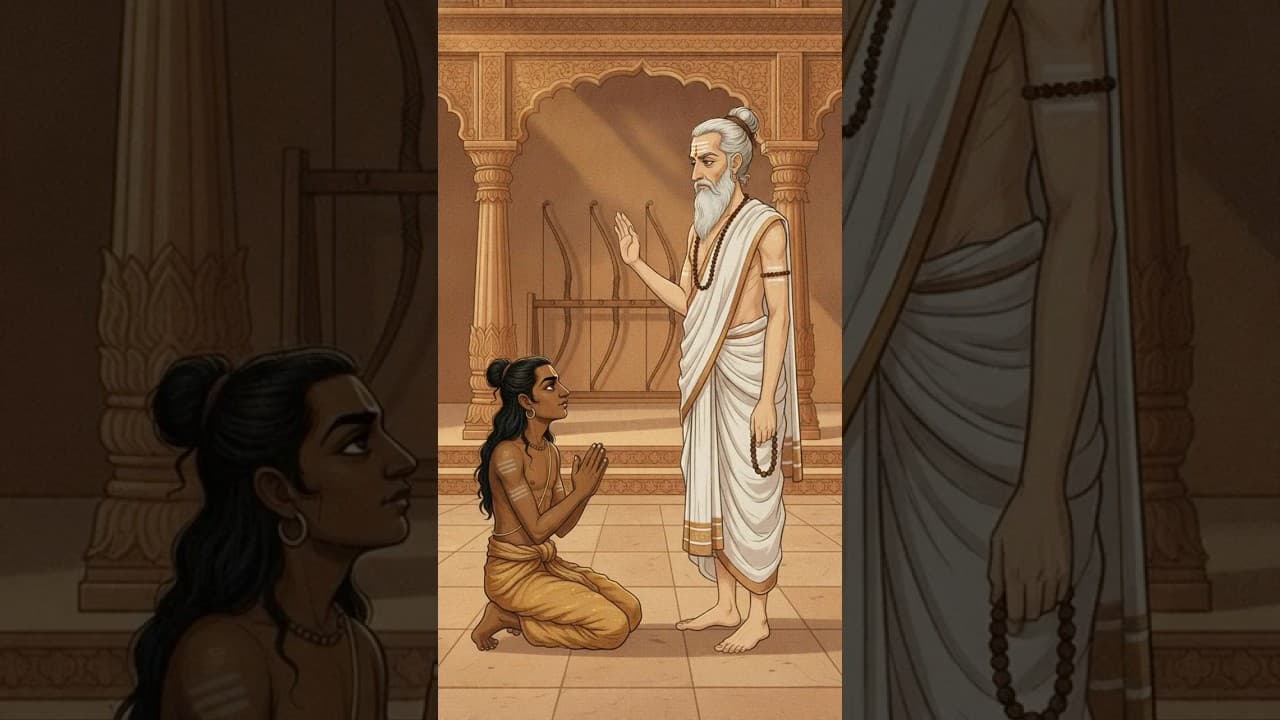
Every archer in Hastinapura trained under Dronacharya — every prince, that is. Eklavya, son of the Nishada chieftain Hiranyadhanu, was turned away at the gate. Dronacharya had already made a private vow: Arjuna would be the greatest archer alive, and he would not risk that promise by training a forest boy of unlisted lineage.
The Guru Who Never Taught Him
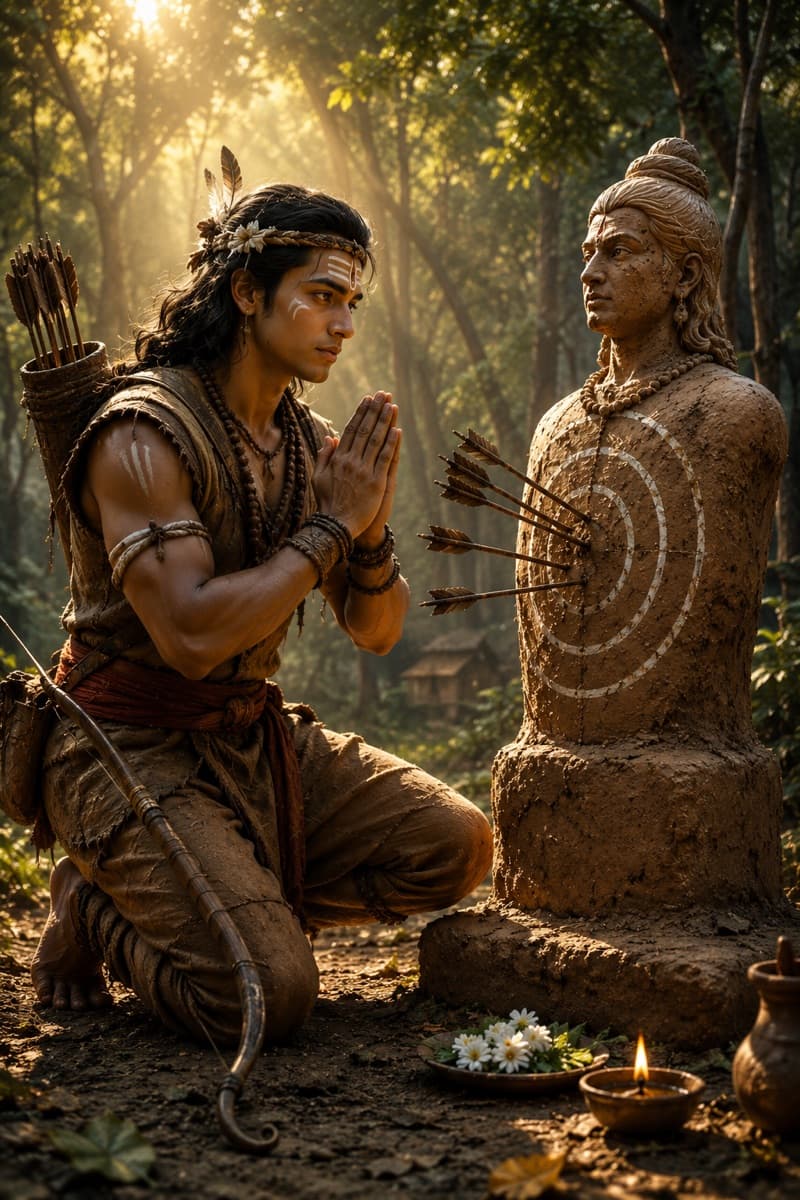
Eklavya did not argue. He went home to the forest, shaped a clay image of Dronacharya with his own hands, and set it beneath a tree. Every day, he bowed to it as his guru, and every day, he practiced — alone, unwitnessed, entirely self-taught, treating a lump of clay with the same reverence a prince would show a living master.
The Skill No One Saw Coming
Years later, Dronacharya's royal students stumbled upon him in the forest. A dog had been barking at Eklavya; without pausing his practice, he had loosed seven arrows into its open mouth in perfect succession, silencing it without drawing blood. When Arjuna heard of this feat, he came to Dronacharya, stricken — his guru had promised he would have no equal, yet a boy who had never received a single lesson from him could outshoot every prince in the kingdom.
The Guru-Dakshina
Dronacharya sought Eklavya out and asked, as any guru may, for his guru-dakshina — a student's gift of gratitude. Eklavya, overjoyed that his unacknowledged teacher had finally spoken to him directly, offered anything he had. Dronacharya asked for his right thumb.
Eklavya did not hesitate. He severed it on the spot and offered it with the same devotion he had shown the clay idol for years — knowing full well it would end his archery forever. He asked for nothing in return, not even the acknowledgment that he had earned.
What the Story Still Asks
Eklavya's tale has never stopped being argued over — a devotion so absolute it silenced its own claim to justice, extracted from a boy denied a teacher for no fault of his own. What remains uncontested is the skill itself: a prince trained by kings needed years of formal instruction to become what a forest boy, guided only by a clay idol and his own discipline, had already become alone.